Buy or Lease? Choosing the Right Option for Your Business

Does your company need to upgrade or add any equipment, vehicles, leasehold improvements or other fixed assets? If so, you might be evaluating whether it makes sense to purchase or lease these items.
The One Big Beautiful Bill Act (OBBBA) enhances first-year depreciation tax breaks, creating incentives for businesses to buy new and used assets. But leasing still offers benefits for some taxpayers. Here's a breakdown of the pros and cons of each option to help you decide what's right for your situation.
Upsides of Buying
Key advantages of owning fixed assets are 1) you're free to use them how you choose, and 2) you retain the resale value. When you own an asset, you should get your money's worth over time, assuming it doesn't become obsolete. This is especially true for assets — such as a desk or drill press — that tend to have long useful lives and aren't affected by technological changes.
In addition, two major tax breaks can provide big tax savings in the first year an asset is placed in service. These breaks were significantly enhanced by the Tax Cuts and Jobs Act — and the OBBBA extends and expands them.
1. Bonus depreciation. A business can claim a first-year bonus depreciation deduction for the cost of qualified new and used property. The OBBBA permanently restores and makes permanent 100% first-year bonus depreciation for eligible assets acquired and placed in service after January 19, 2025. Before the OBBBA, for 2025, you could claim only 40% first-year bonus depreciation for most eligible assets.
Eligible assets for first-year bonus depreciation include most depreciable personal property, such as:
- Computer hardware and peripherals,
- Off-the-shelf software,
- Furniture and office equipment,
- Certain vehicles, and
- Certain real estate qualified improvement property (QIP).
The OBBBA also contains a special provision that extends the 100% bonus depreciation to qualified production property (QPP) with construction periods beginning between January 19, 2025, and December 31, 2028. To qualify, the QPP must be placed in service in the United States or a U.S. possession before 2031. Contact your tax advisor for details.
If you operate your business as a C corporation, there's no limit on the cost of eligible assets that you can deduct in the first year under 100% first-year bonus depreciation. Should the write-off cause a net operating loss (NOL) for the year, the NOL can be carried forward indefinitely to offset up to 80% of the corporation's taxable income in future years.
Important: Individual business owners who claim this tax break on their personal returns may trigger the excess business loss rule. This potential pitfall may apply to sole proprietors, S corporation shareholders, partners and members of most limited liability companies (LLCs). Your tax advisor can help evaluate whether you're affected by this rule.
2. Section 179 expensing. This tax law provision provides a current deduction for the cost of qualified new or used business property that's placed in service in the tax year. Under the OBBBA, for eligible assets placed in service in taxable years beginning in 2025, a business taxpayer can potentially write off up to $2.5 million with the Sec. 179 deduction. Before the new law, the scheduled maximum amount for 2025 was only $1.25 million.
However, a phaseout rule reduces the maximum annual Sec. 179 deduction if the taxpayer places more than $4 million of eligible assets in service during the year. Before the new law, the scheduled Sec. 179 phaseout threshold for 2025 was $3.13 million. The increased Sec. 179 figures will be adjusted annually for inflation for taxable years beginning in 2026 and beyond.
Most tangible depreciable business assets (including off-the-shelf software and QIP) also qualify for the Sec. 179 deduction. Sec. 179 expensing is also allowed for:
- Roofs, HVAC equipment, fire protection and alarm systems, and security systems for nonresidential real property, and
- Depreciable personal property used predominantly in connection with furnishing lodging
There's also a special limitation on Sec. 179 deductions for heavy SUVs used over 50% for business. For tax years beginning in 2025, the maximum Sec. 179 deduction for a heavy SUV is $31,300.
Sec. 179 deductions are subject to several limitations that don't apply to first-year bonus depreciation. So it's generally advisable to claim allowable 100% first-year bonus depreciation deductions, rather than claiming Sec. 179 deductions for the same assets.
These two tax breaks can provide significant savings: Many businesses can write off the full cost of most equipment in the year it's purchased. Any remainder may be eligible for regular depreciation deductions over IRS-prescribed schedules.
Potential Downsides of Buying
The primary downside of buying fixed assets is that you're generally required to pay the full cost upfront or finance it, though bonus depreciation and Sec. 179 expensing are still available for property that's financed. If you finance a purchase through a bank, a down payment of at least 20% of the cost is usually required. This could tie up funds and affect your credit rating.
Additionally, if you decide to finance fixed asset purchases, be aware that, under current tax law, business interest expense deductions are generally limited to 30% of adjusted taxable income (ATI). However, any excess can be carried over indefinitely.
The business interest expense limitation rules are complex. For 2025, the limit generally affects companies with average annual gross receipts above $31 million for the three-tax-year period ending with the preceding tax year. Other rules and restrictions apply, including exceptions for auto dealers, farmers and real estate businesses.
But the business interest limitation isn't currently as unfavorable as it was under prior law. Under the OBBBA, starting with the 2025 tax year, ATI is calculated without regard to allowable deductions for depreciation, amortization or depletion. This could increase allowable business interest deductions compared to what was allowed under prior law. Contact your tax advisor to determine whether the limitation applies to your situation. If so, it could increase your after-tax cost of capital, potentially making leasing more attractive.
Another practical consideration is the risk of obsolescence. When you own an asset that quickly becomes outdated, it may be difficult to unload for a reasonable price. For example, buying a high-end computer for $5,000 today might leave you with a very low resale value in three years.
Upsides of Leasing
On the flip side, leasing typically requires little or no down payment and preserves cash flow. For example, if you lease equipment with a five-year useful life, the first-year expense may be only 20% of the total asset cost. And some leases may cover maintenance costs. The funds you save by leasing an asset, rather than buying it, can be used for other purposes, such as repaying debt or expanding your headcount.
Of course, your business is entitled to a tax deduction for annual lease payments, but you miss out on bonus depreciation and Sec. 179 deductions. Although there are some nuances, lease payments are generally deductible as "ordinary and necessary" business expenses. As with vehicle ownership, annual deduction limits may apply.
Beyond taxes, leasing may be a more viable option for companies with questionable credit ratings, limited access to bank financing or limited cash reserves. And, in today's competitive leasing market, leases with favorable terms are common. It may also be advantageous when an asset is likely to become obsolete by the end of the term — when the lease ends, you simply return it to the lessor and find an up-to-date replacement to lease.
Potential Downsides of Leasing
Leasing does have drawbacks, however. Leases often restrict asset usage and modifications. And, over the long run, it may cost more than buying the same asset, because you're continually renewing the lease or acquiring a new one. For example, a top-of-the-line computer that normally costs $5,000 might run you $200 a month over a three-year lease term, or $7,200. After all, leasing companies have to make profits, too.
In addition to losing out on first-year depreciation tax breaks, businesses that lease equipment don't build any equity. At the end of the lease term, you get nothing back, whereas buying might result in some return on resale. However, some leases give you the option to buy the asset at the end of the lease term, which can sometimes be advantageous depending on the buyout price.
What's more, when you lease, you're generally locked in for the entire term. So, you're obligated to keep making lease payments even if you stop using the equipment. In the event the lease allows you to opt out before the term expires, you still may be forced to pay an early-termination fee.
Weigh Your Options
The decision to buy or lease business assets isn't one-size-fits-all. It depends on your operational needs, cash flow, financing options, tax position and long-term plans for the asset. Your tax and financial advisors can help you understand the latest tax law changes, run the numbers and choose the strategy that makes the most sense for your company.
INDUSTRY SPOTLIGHT
Manufacturing Accounting & Advisory Services
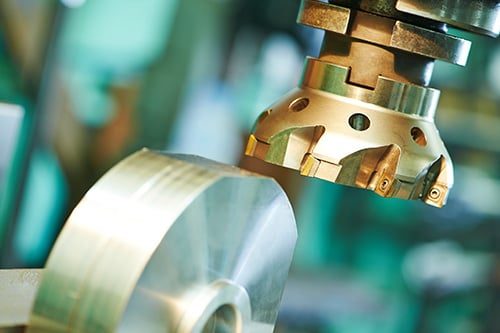
Dig deeper into your organization's financial nuts and bolts with manufacturing accountants. Understanding the impact of your expenses via cost analysis is essential to getting the most from your financial resources. Our accountants can review your direct and indirect costs to determine where savings can be made to improve cash flow and fund the expansion of your operations.
